
 Native Americans are the most unbanked group in the country, with 16% lacking access to banking services. This can lead to a range of challenges, including difficulty accessing credit, paying for basic necessities, and gaining financial literacy.
Amber Buker, a Choctaw Nation member who grew up in Tulsa, Oklahoma, experienced these challenges firsthand. When she was younger, she made mistakes with credit cards due to a lack of guidance. As she got older and worked to fix her credit, she realized that many banks didn't understand the unique needs of Native Americans. “There was a really huge invisibility gap which is something that is so common for Native people,” Buker told Tribal Business News. “I got curious and I started looking into financial services specifically, and that invisibility carries over into financial services as well. I thought, if they knew some of the lived experiences of Native people, they might make different policies.” In 2021, after eight years in college and a banking gig, Buker, who is also an attorney, founded Totem, a startup that offers a range of financial products and services tailored to the needs of Native Americans. Totem's services are designed to be accessible to Natives who lack broadband or live on reservations or in rural areas that are so-called “banking deserts.” The company, which raised $2.2 million in investment funding last year, launched its new spending account product in July 2023, garnering “multiple hundreds” of users - an “amazing” pace for a small banking operation, Buker said. “It’s been really exciting,” Buker said. “We had to sort of stick it to the man and launch our customer accounts July 3, right before July 4. Getting people to change bank accounts is a big ask, and we’ve been pretty blown away by the response so far. People are already asking us for new things, the biggest of which is business accounts. That’s exciting because they want to trust us with the funding for their beadwork side-hustle or their podcast or their cement mixing business.” Totem’s Native-centric business model made it a “compelling” opportunity for investors like Raven Indigenous Capital Partners, which led the first funding round with $1 million and has joined a follow-on round with an additional $500,000, according to the fund’s U.S. market lead, Garry McBerryhill, a citizen of the Muscogee (Creek) Nation. “I’ve had a lot of the same experiences Amber had in struggling with the programs that exist to help us,” McBerryhill said. “The way [Buker] brought together her experience, her knowledge about the industry, and this incredibly ambitious vision — we were excited to build up that relationship.” Totem’s success alsor earned Buker a spot recently among seven new fellows MIT Solve’s Indigenous Communities Fellowship, a sub-cohort of MIT’s larger Solve program, which provides grant funding, technical assistance, networking, and mentorship to entrepreneurs. Solve Indigenous fellows are chosen through a competitive process to work on solutions that utilize technology to solve social problems. Totem’s technology solution is to deliver banking from the Native perspective, which for now means no monthly fees, no minimum balance requirements, and mailing a debit card where you need it to go. The service also supports Totem-to-Totem money transfers with no fees. “There's a lot of times where auntie needs 20 bucks, so being able to share funds is super important,” Buker said. “We wanted to have a safe, free account that benefits could be deposited into, and we also prioritize features that uphold Native values.” With Totem’s spending account product off to a successful kickoff, Buker is turning her sights toward building partnerships with tribes to deliver benefits and citizen payments through Totem, rather than paper checks or prepaid debit cards, which can carry check-cashing fees, ATM fees, or fees leveraged by prepaid card companies. “When you look at (fees) on prepaid cards, you see that two to four percent of the value on that card ends up lost and never returned to the tribe,” Buker said. “At every modality we look at it, the people, the tribal members are not getting the full amount of benefits they’re entitled to, because just like Native communities are invisible to retail banks, tribes become invisible to these companies they work with.” Building partnerships with tribes represents one way the company plans to generate revenue, alongside interchange fees on debit transactions, Buker said. But the real benefit is creating a “virtuous cycle” where partner tribes, which also receive a portion of the company’s interchange fees, keep money circling around the reservation, rather than bleeding out into the wider economy. “Basically, what we're doing is creating a financial ecosystem, and we're really a company that exists to serve this financial ecosystem,” Buker said. “We’re keeping money in Native communities for longer.” That’s one of the many reasons there should be more Native companies in fintech and banking, McBerryhill said. “Indian Country and Native business leaders have a lot to add to financial technology and financial services. We bring a deep understanding of the barriers that marginalized communities face in trying to access our money,” McBerryhill said. “Every part of that business - there is a need for Native business leaders to come in and make their impact there. “I have a lot of belief and conviction in the Native business community to modernize, and innovate, and to better the way these industries work.”
0 Comments
 Two Native enterprises purchased a stake in Arctic Circle Wild Seafood, a seafood purveyor based in the Inupiat Eskimo Village of Kotzebue, Alaska.
Tocabe Indigenous Marketplace, a Denver, Colo.-based restaurant and food retailer, and Red Lake Inc., the business arm of the Red Lake Nation, each purchased a 25% ownership stake in the seafood business. Financial terms were not disclosed. “This acquisition is a step forward in growing and supporting the supply chain for Native producers, but also to actively invest in the development of Native producers,” said Tocabe Co-Founder Ben Jacobs, a member of the Osage Nation. Jaycob Robinson, chief development officer of Red Lake, Inc., said his company was “thrilled” to expand its portfolio of food-production companies by joining in the acquisition of Arctic Circle Wild Seafood. The tribal economic development entity also owns Red Lake Nation Fisher, a supplier of freshwater walleye that was founded in 1919. The partnership is a “next step” in building a sustainable and accessible food system for Native people and providing Indigenous ingredients to people who want to enjoy America's original foods, Robinson said in a statement. Arctic Circle Wild Seafood operates out of one of the northernmost fishing points in Alaska, per a company statement. Currently, the company pulls in salmon, sheefish, and cod from a team of fishers that are 90% Native American, utilizing the village of Kotzebue as a trading hub to reach 11 other surrounding villages. Arctic Circle Co-founders Mike and Lydia Scott will stay on to work with Tocabe and Red Lake. “We’re pleased both Red Lake and Tocabe are now owners within Arctic Circle Wild Seafood’s family of fishers and quality customers and are excited about the new markets and growth opportunities they’ll help create,” the Scotts said in a statement. The acquisition of Arctic Circle represents the latest step in a Tocabe push for creating ready-to-eat meals from Native products, the statement notes. “We are incredibly excited to begin working alongside Arctic Circle and to extend our decades-long partnership with Red Lake,” Jacobs said. “Bringing together three Native-owned food businesses is an amazing step in supporting the Indigenous foods system and extending the reach of the Native fishermen in northern Alaska.”  Hawaiian Electric Co. must be held accountable for the billions of dollars in damages to public property caused by the deadly Lahaina and Kula fires this month, Maui County said in a lawsuit filed Thursday in Hawaii state court that asserts the utility's downed power lines sparked the blaze. When the National Weather Service issued a "fire weather watch" on Aug. 6 and a red flag warning for an increased risk of fire danger on Aug. 7, Hawaiian Electric negligently failed to power down its electrical equipment, and live power lines then fell and ignited dry grass and brush that set off the Lahaina, Kula and Olinda fires, according to the complaint. Despite the weather service's warnings that damaging winds from Hurricane Dora could knock down power lines and that any fires would likely spread quickly, Hawaiian Electric and its affiliate Maui Electric Co. "inexcusably kept their power lines energized during the forecasted high-fire danger conditions," the county said. "Defendants' inactions caused loss of life, severe injuries, complete destruction of homes and businesses, displacement of thousands of people, and damage to many of Hawai'i's historic and cultural sites," it added, noting that damages from the Lahaina fire alone are estimated at upwards of $5 billion. About 10:45 p.m. on Aug. 7, security camera footage at the Maui Bird Conservation Center recorded a bright flash in the woods, which the county claims came at the same time a significant fault — usually when a power line comes into contact with something — was recorded in Hawaiian Electric's grid. Not long after, the Olinda fire came to life, burning through more than 1,000 acres in the community of Kula, according to the suit. Then the Lahaina fire, which first ignited around 6:40 a.m. on Aug. 8, burned through the capital of the former Hawaiian Kingdom and damaged more than 2,000 acres, destroying homes, businesses, schools, churches and cultural sites, the complaint states. Several historic structures and landmarks were damaged or destroyed in the blaze, including the Lahaina Heritage Museum, according to the suit. The fire has claimed the lives of 115 people, while leaving others with severe burns and smoke inhalation injuries, the county said. The Kula fire ignited around 11:30 a.m. on Aug. 8, burning through more than 200 acres and destroying at least 15 structures, the suit states. As early as Aug. 4, the National Weather Service in Honolulu posted on X, the social media platform formerly known as Twitter, that Hawaii could experience indirect impacts from Hurricane Dora from Aug. 7 through Aug. 9, including strong trade winds and a high-fire danger, according to the complaint. The weather service issued more warnings in the days following and Hawaiian Electric knew that the high winds could topple power lines and potentially ignite vegetation, the suit states. As an electric utility, Hawaiian Electric was "engaged in dangerous activity" and "owed a heightened duty of care to the public to avoid foreseeable risks attendant to this activity, including the risk of fire," the county said. But the company failed in its obligations, according to the suit. The practice of shutting down power lines during fire weather conditions is common across the western U.S., the suit states, noting that Southern California Edison Co., Pacific Gas & Electric and other California utilities have all implemented power shut-offs during red flag and high wind events. Hawaiian Electric, on the other hand, has never created a public safety power shut-off plan, despite knowing power shut-off is an effective strategy to prevent wildfires, the complaint states. The suit, which also names as defendants Hawai'i Electric Light Co. and Hawaiian Electric Industries Inc., lists claims of negligence, gross negligence, nuisance and ultrahazardous activity, among others. The county seeks damages for all property damage, repair or replacement of damaged or destroyed property, debris removal costs, damages for various environmental cleanup and restoration, punitive and exemplary damages, litigation costs and attorney fees, among other relief. John Fiske of Baron & Budd PC, one of the firms representing Maui County, said in a statement Thursday, "The public infrastructure and public resource damages we are seeking in this suit will be vital to the rebuilding process in the aftermath of what is the nation's worst and deadliest wildfires." A representative for Hawaiian Electric did not immediately respond to a request for comment late Thursday. In a message posted to the company's website on Aug. 17, Hawaiian Electric President and CEO Shelee Kimura addressed the devastating fires, saying the company is working to restore power to the Maui community. Kimura said the company is working to replace an estimated 400 poles, 300 transformers and other equipment damaged by the fires and high winds. The company also suspended bills for about 18,000 customers in the affected areas, according to the message. "Facts about this event will continue to evolve," Kimura said. "And while we may not have answers for some time, we are committed, working with many others, to find out what happened as we continue to urgently focus on Maui's restoration and rebuilding efforts." Maui is represented by Victoria J. Takayesu and Thomas Kolbe of Maui County's Department of the Corporation Counsel, L. Richard Fried Jr., Wayne K. Kekina and Patrick F. McTernan of Cronin Fried Sekiya Kekina & Fairbanks, John P. Fiske, Victoria Sherlin and Taylor O'Neal of Baron & Budd PC and Ed Diab and Robert J. Chambers II of Diab Chambers LLP. Counsel information for the defendants was not immediately available. The case is County of Maui v. Maui Electric Co. Ltd. et al., case number 2CCV-23-0000238, in the Second Circuit Court for the State of Hawaii. 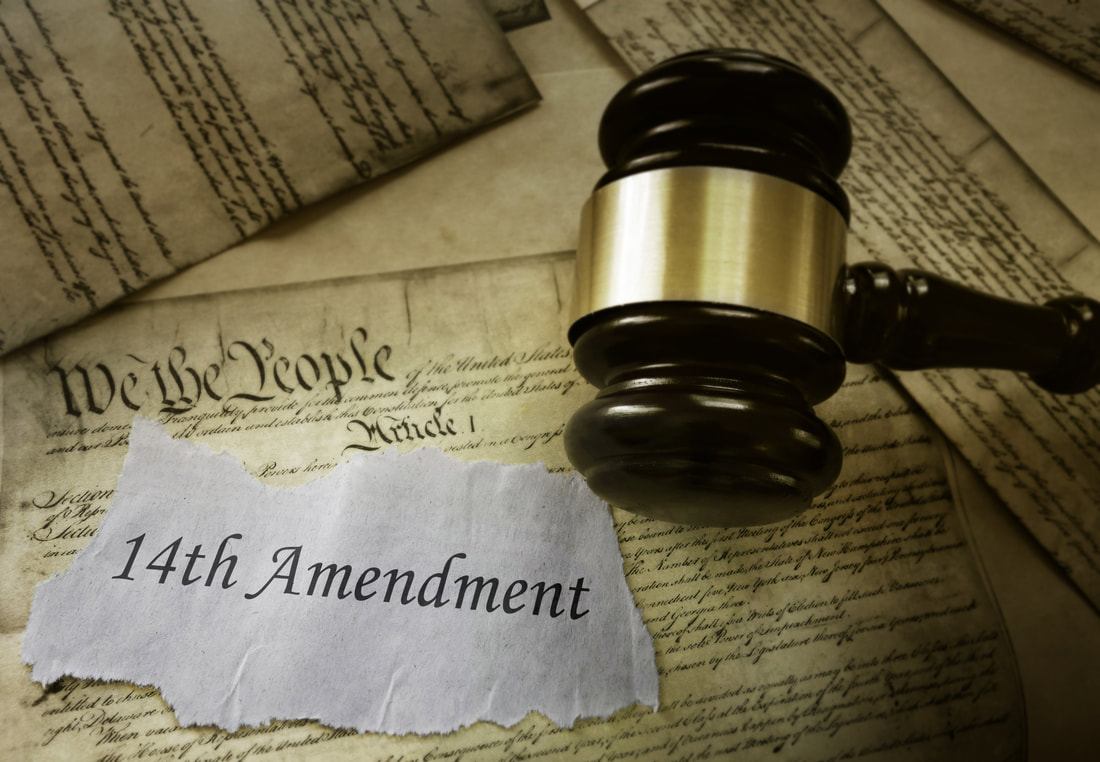 A Florida attorney urged a federal court to declare that Donald Trump is constitutionally prohibited from seeking a second presidential term, or any public office, due to his alleged participation in the Jan. 6, 2021, insurrection at the U.S. Capitol, according to a lawsuit filed Thursday. Lawrence A. Caplan of Lawrence A. Caplan PA in Boynton Beach petitioned the U.S. District Court for the Southern District of Florida seeking a declaration that Trump is disqualified to run for public office under the 14th Amendment, which states that anyone who took an oath to defend the U.S. Constitution can't run if they "have engaged in insurrection or rebellion against the same, or given aid or comfort to the enemies thereof." Additionally, Caplan argues Trump is also disqualified from participating in the upcoming Florida Republican Party primary scheduled for spring 2024 because of his alleged attempt to overturn the 2020 election results as Congress convened to certify Electoral College votes Jan, 6, 2021. "On January 6, 2021, after giving a speech to a throng on the Ellipse near the Capitol, President Trump exhorted the throng to march to the Capitol and told them that he would be right there with them," Caplan stated in his lawsuit. "As we are well aware, the throng marched on the Capitol, forced their way into the Capitol building, ransacked the rotunda area, and even made their way into several offices of representatives and senators. Not for several hours were the National Guard called in to quell the insurrection as allegedly President Trump refused to do so and had been mesmerized by the events that were taking place on his television at the White House." In his petition, Caplan cited Section 3 of the 14th Amendment, which also "automatically excludes" anyone "from any office and position of power in the sovereign states and their many subdivisions" after they took an oath to support and defend the Constitution, then engaged in rebellion against the U.S. The amendment was ratified in 1868 as a measure to protect the U.S. democracy from anyone who fought against it. Caplan notes in his petition that he holds no political affiliation and has cast votes for Democrats and Republicans over the past 12 presidential elections, and was a registered independent for many years. Following graduation from the University of Florida Law School, Caplan went to work for the National Security Agency, he told Law360 on Thursday. The attorney cited his work at the NSA if anyone decides to question his patriotism. Since the Jan. 6 event, Caplan said "hundreds of insurrectionists" have been charged, tried and convicted of various counts related to that day. Stewart Rhodes, founder of the Oath Keepers, was convicted of seditious conspiracy for his role in the attack on the Capitol and sentenced to 18 years in prison earlier this year. Trump himself was indicted by a federal grand jury earlier this month on charges accusing him of trying to overturn the 2020 election, including one count of conspiring to obstruct and one count of actually obstructing Congress' certification of Electoral College votes Jan. 6, 2021. Caplan told Law360 that even though many people believed Trump participated in an insurrection, it actually took an indictment to trigger the Constitution's disqualification clause. Caplan added he became convinced Trump was disqualified from running for office again after reading an article published in The Atlantic by legal scholars J. Michael Luttig and Laurence H. Tribe. "Up until then, I had been operating under the assumption that there had to be a conviction under the disqualification clause," Caplan told Law360. In an opinion piece for The Hill, George Washington University Law School professor Jonathan Turley argued the evidence doesn't support Trump's disqualification and that he was not charged by Special Counsel Jack Smith with either rebellion or insurrection. But Caplan said that should not matter if judges interpret the 14th Amendment as it was written at the time, calling the case of disqualification a "slam dunk," although he believes there will be attorneys who'll try to argue otherwise. Caplan believes his lawsuit is the only one so far that challenges Trump's eligibility for public office and that if it gains enough traction, it could go all the way to the U.S. Supreme Court. Caplan also believes he has standing, even though Florida wasn't a state in which Trump disputed 2020 election results. While Caplan, 65, practices mostly tax, corporate estate planning and business transactional law, he thinks this lawsuit will be one of his last legal actions before retiring. "The bottom line is that I felt that someone had to get this out there," he said. Steven Cheung, the spokesperson for Trump's 2024 presidential campaign, did not immediately respond to a request for comment Thursday. Caplan is representing himself. Counsel information for Trump could not be immediately determined Thursday. The case is Lawrence A. Caplan v. Donald J. Trump, case number 0:23-cv-61628, in the U.S. District Court for the Southern District of Florida.  The American Bar Association on Friday condemned recent actions from elected officials and advocacy groups that challenge law firms' diversity programs in light of the U.S. Supreme Court's decision overturning affirmative action, saying it is "deeply troubled" by these efforts.
"The legal profession needs to create a more diverse workforce," ABA President Mary Smith said in a statement. She noted that just 6% of lawyers are Hispanic despite making up 19% of the U.S. population. Similarly, only 5% of lawyers are Black, while they make up 13% of the overall population. "Diversity also is good for business and something more clients are demanding," she said. The ABA's statement came days after the American Alliance for Equal Rights sued Perkins Coie LLP and Morrison Foerster LLP separately in federal courts in Dallas and Miami on Tuesday, alleging that the law firms' fellowships dedicated to minorities amount to unlawful racial discrimination. The organization is fronted by Edward Blum, whose legal challenge culminated in the landmark U.S. Supreme Court ruling in June that struck down race-based admission practices at Harvard and the University of North Carolina. "It is regrettable that the ABA is endorsing employment practices that exclude certain applicants because they are the wrong race," Blum said in a statement to Law360 Pulse on Friday. "Lawyers should know that the law does not permit racial discrimination in order to achieve proportional racial outcomes in any profession." In the ABA statement, Smith said diversity, equity and inclusion programs "help remove the barriers that block the recruitment and retention of legal talent from underrepresented groups." "Efforts to open the opportunities in the legal field to underrepresented groups would be significantly damaged by the loss of diversity and pipeline programs," she added. Smith reiterated that the third of the ABA's four goals is to eliminate bias and enhance diversity, and the organization is committed "to the promotion of full and equal participation" in the association, the legal profession and the justice system. The suits stem from the high court's June 29 ruling in Students for Fair Admissions v. Harvard , which legal experts have said will usher in years of litigation concerning the use of affirmative action in workplace hiring. In the wake of the decision, Smith suggested Friday that the legal profession needs to review its programs and identify ways to comply with the law while promoting diversity, inclusion and equity in the profession. "Now is the time for law firms, law schools and employers to rededicate themselves to creating a more diverse and inclusive environment," Smith said. 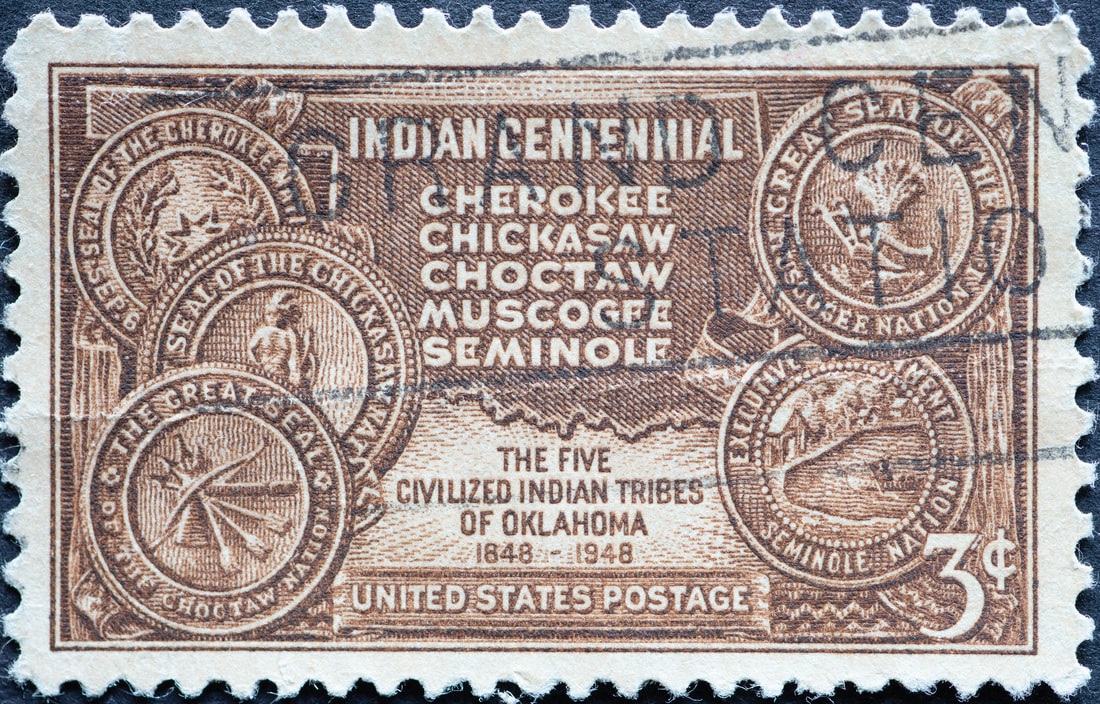 Two descendants of those enslaved by the Muscogee (Creek) Nation will get another chance at applying for citizenship, a tribal district court judge ruled, saying substantial evidence supports their claims that a 19th century treaty guarantees them the same rights and privileges as other Native citizens. The ruling by Muscogee (Creek) Nation District Court Judge Denette Mouser on Wednesday reversed a 2020 administrative decision by the tribe's citizenship board to deny requests by Rhonda Grayson and Jeffrey Kennedy and remanded the case for further review. "The board was unable (neither through direct examination of its own witness nor cross-examination of plaintiff's witnesses) to provide any evidence whatsoever of the abrogation or inapplicability of the Treaty of 1866 and in fact provided confirmation of its own regarding the effect of the conflict between the nation's Constitution and the treaty," Judge Mouser wrote in the order. Should the citizenship board approve their requests, the decision could have broader implications for other descendants seeking the same status. Grayson and Kennedy, both board members of the Muscogee Creek Indian Freedmen Band, had argued that the Treaty of 1866 between the federal government and Muscogee (Creek) Nation guarantees them and their fellow descendants citizenship within the Oklahoma tribe. "It's with profound emotion and deep-rooted ancestral pride that we announce the triumphant outcome in our long-fought case for Rhonda Grayson and Jeff Kennedy, Black Creek freedmen, who faced an unjust denial of their rights to tribal citizenship," their attorney Damario Solomon-Simmons said in a statement. "Today's decision by the highly decorated Muscogee (Creek) Nation District Court Denise Mouser affirms that Article II of the Creak Treaty of 1866 is the 'supreme law of the land' and guarantees that Creek freedmen and their descendants, regardless of their 'blood' status,' 'shall have and enjoy all the rights and privileges of native citizens' of the MCN. Creek Treaty of 1866, and MCN does not have the right to discriminate against Creeks of African descent." The Treaty of 1866 gave certain rights and privileges to people who were enslaved by the Cherokee, Choctaw, Chickasaw, Muscogee (Creek) and Seminole nations, according to the U.S. Department of the Interior. The nations, often referred to in federal statutes as the Five Civilized Tribes, were required to abolish slavery on their lands and give full rights to those they had enslaved and to their descendants. Solomon-Simmons told Law360 in December that he estimates more than 100,000 people would be eligible for Creek citizenship if his clients prevail. The tribe is the fourth-largest in the country, with 97,000 citizens. Muscogee (Creek) Nation Attorney General Geri Wisner said her office intends to immediately appeal Judge Mouser's ruling to the tribe's Supreme Court. "We respect the authority of our court, but strongly disagree with Judge Mouser's deeply flawed reasoning in this matter," Wisner said in a statement to Law360 on Thursday, adding that the Muscogee (Creek) Nation's Constitution, "makes no provisions for citizenship for non-Creek individuals." "We look forward to addressing this matter before our nation's highest court," she said. Grayson and Kennedy were part of a group of descendants of enslaved people who sued the Muscogee Nation and the federal government in 2018 in an effort to gain tribal citizenship. They accused the tribe of "perpetuat[ing] race-based discrimination and the badges of slavery by using the freedmen descendants' African ancestry to deny them the rights and benefits of ... citizenship." A federal judge dismissed the case in 2019 since Grayson and Kennedy never actually applied for Creek citizenship at the time. The two subsequently applied for, and were denied, citizenship later that year, according to court filings. After their administrative appeals were denied, they filed suit in tribal court, arguing in a motion for summary judgment that as descendants of those enrolled in the Dawes Commission as Muscogee (Creek) freedmen, they are entitled to tribal citizenship rights under Article II of the Treaty of 1866. Article II of the treaty stipulates that persons of African descent "shall have and enjoy all the rights of native citizens." The Dawes Commission, established in 1893 by the federal government to negotiate separate agreements with the five tribes, was tasked with equally dividing land into plots for each of their individual members. "The plain meaning of this treaty language guarantees eligible freedmen and their descendants all the rights and privileges of native citizens," the plaintiffs said in the 2020 motion. "Thus, if a native Mvskoke 'by blood' is permitted to vote in a tribal election, a Creek freedman would enjoy the same right." The Muscogee (Creek) Nation had denied Grayson and Kennedy's requests for citizenship based on Article III of its own citizenship clause. The clause states that those with lineal ancestors, whose names appear on the final "blood" rolls as approved by the Tribes Act of 1906, are tribal members, according to court records. The Tribes Act of 1906 says no one can be enrolled as a citizen of the Five Civilized Tribes unless there "shall be conclusive evidence as to the fact of such application." The Cherokee Nation is the only one of the five tribes that has given full citizenship rights to descendants of tribe-owned slaves. The "blood" rolls, known as the Dawes Rolls, are a federal record, compiled between 1898 and 1814, of members of the Cherokee, Creek, Choctaw, Chickasaw and Seminole nations. The five tribes use the Dawes Rolls today as a basis for determining tribal membership, usually requiring applicants to show proof of descent from an individual already listed on the rolls. Members of the Muscogee (Creek) Nation were divided into two categories on the rolls. Those with Creek blood were listed as citizens, and the names of enslaved individuals or those of multiracial heritage were placed on the rolls as freedmen. Grayson and Kennedy are represented by Damario Solomon-Simmons of Solomon Simmons Law. The Citizenship Board of the Muscogee (Creek) Nation is represented by Geri Wisner of the tribe's Office of the Attorney General. The case is Rhonda Grayson and Jeffrey Kennedy v. Citizenship Board of the Muscogee (Creek) Nation of Oklahoma, case number CV-2020-0034, in the Muscogee (Creek) Nation District Court.  A Seattle seafood company has agreed to nearly $1 million in fines after several of its ships dumped seafood processing waste into protected areas of the North Pacific Ocean and committed other Clean Water Act violations, the U.S. Environmental Protection Agency said in a Thursday news release. The EPA cited American Seafoods Co. LLC and five of its vessels for breaching terms of their pollution discharge permits, including illegal releases into the Heceta and Stonewall bank areas, two rocky banks off the Oregon coast known for commercial fishing and biodiversity. The company also failed to meet a variety of reporting and discharge monitoring requirements while harvesting and processing fish, racking up hundreds of violations altogether, according to the news release from the EPA. American Seafoods has a fleet of ships that fish species including wild Alaska pollock and Pacific cod in the North Pacific and the Bering Sea and process, package and freeze products while on the water, according to the company website. The citations were issued after the EPA assessed the industry in Oregon and Washington and found that American Seafoods and its vessels were far less compliant with regulations than other offshore fish processors, the agency said. "In amassing hundreds of violations from illegal discharges to sloppy and even non-existent record-keeping American Seafoods Company demonstrated a clear disregard for the fragile and valuable resources that sustain its business," Ed Kowalski, director of the EPA's Enforcement and Compliance Assurance Division in Seattle, said in the news release. The EPA prohibits seafood processing vessels from dumping in areas that are shallower than 100 meters in depth, where fish, crab and other marine species already face low-oxygen conditions, according to the news release. Under a series of consent agreements filed with the EPA's regional hearing clerk on Sept. 22, American Seafoods and the business entities listed as the owners of each of the five vessels — American Dynasty LLC, American Triumph LLC, Northern Eagle LLC, Northern Jaeger LLC and Ocean Rover LLC — agreed to pay a total of $999,000 in penalties. A separate administrative order on consent, effective Aug. 17, also requires that the companies institute systematic improvements to ensure they comply with the terms of their permits, issued through the EPA's National Pollutant Discharge Elimination System for offshore seafood processors who discharge wastewater into federal waters off the Washington and Oregon coasts. "When issuing a permit, EPA confers to the permit holder the responsibility to protect our nation's resources," Kowalski said. "We expect the company-wide, systematic overhaul of its operations will re-focus American Seafoods Company on the true value of its permit, the importance of tracking compliance with the permit, and the resources that permit entrusts it with protecting." American Seafoods did not immediately respond to a request for comment  California lawmakers on Thursday gave final approval to a bill that would decriminalize possession and use of certain plant- and fungus-derived psychedelics, sending the bill to the governor's desk.
The state Senate on Thursday voted to approve changes made to the legislation by the General Assembly, after previously approving the bill on a 21-16 vote in May. The General Assembly passed the bill on Wednesday on a 43-15 vote. Sponsored by state Sen. Scott Wiener, D-San Francisco, the bill, S.B. 58, would allow for the personal possession of psilocybin and psilocin, which are found in psychoactive mushrooms, as well as plant-derived DMT and mescaline. Mescaline derived from the peyote cactus, which holds special legal status as a sacrament in some Native American religious ceremonies, would not be legalized for general adult use under the law. "California's veterans, first responders and others struggling with PTSD, depression, and addiction deserve access to these promising plant medicines," Wiener said in a statement. "S.B. 58 has prudent safeguards in place after we incorporated feedback from three years of deep engagement with a broad array of stakeholders." General Assembly lawmakers amended the legislation by removing ibogaine from the list of psychedelics that would be decriminalized and adding provisions to create a working group under the state's health agency to advise policymakers on creating a framework for overseeing group therapeutic use. "We know these substances are not addictive, and they show tremendous promise in treating many of the most intractable conditions driving our nation's mental health crisis," Wiener said. "It's time to stop criminalizing people who use psychedelics for healing or personal well-being." The legislation would legalize possession of up to 4 grams of the substances by persons age 21 or older. The bill would also create new civil and criminal penalties for giving psychedelics to underage people. If California Gov. Gavin Newsom, a Democrat, signs S.B. 58 into law, it would take effect on Jan. 1, 2025, and make California the third state to decriminalize psychedelics. Oregon and Colorado did so via the ballot initiative process in 2020 and 2022, respectively. A previous version of the California psychedelics bill passed the state Senate in June 2021 but stalled out in the state Assembly.  When it took Legal Services NYC staff attorney Julian Castronovo more than three and a half hours to file name-change petitions on behalf of a handful of transgender clients in the civil court in Manhattan one morning in April, it felt like something in the system wasn't working right. That feeling was aggravated by a clerk outing Castronovo, who is nonbinary and uses they/them pronouns, when they didn't offer that information themself, and it was of no consequence in the moment — "I didn't know you were transgender," they recalled the clerk saying. And as the clerk asked Castronovo to step to the side and wait while she dealt with other matters, they said they were made to feel different from their cisgender colleagues who were able to file their cases without problems. "It was one of those moments, which do not happen often, where someone made my professional identity as an attorney second to my personal identity as a transgender person," they told Law360. "I was frustrated for the day, and I felt really angry." The legal process for name changes is clearly defined by New York law and is supposed to be straightforward. But after being left mostly in the hands of administrative staff due to procedural changes put in place during the COVID-19 pandemic, attorneys familiar with the process say court clerks have added requirements that have resulted in delays for many transgender applicants. Uptil the last several years, New Yorkers looking to change their names and gender were governed by a law crafted with the stated intent of preventing fraud. The process required applicants to present medical documentation and publish notices of their name change in a newspaper. With the passage of the Gender Recognition Act in 2021, however, the state eased certain requirements for name and sex designation changes, eliminating the need for medication documentation from those seeking to change their gender markers and ending the public notice requirement. From a practical standpoint, the Gender Recognition Act also streamlined the application process: petitions and supporting documentation are reviewed by court clerks for compliance with the statute, and then it's sent up to a judge in advance of a hearing where a final decision is made. But as the courts emerged from the pandemic, the process was changed to eliminate hearings and, instead, to allow decisions to be made solely on the submitted documents. It has remained that way since. While the law only requires New York natives to show a birth certificate as proof of ID to change their names, attorneys say that since last March, clerks have required them to attach additional documents such as proof of address and photo IDs. The result, Castronovo said, has been clerks effectively acting as gatekeepers and preventing petitions from ever reaching a judge. Instead of appearing before judges, applicants now have their cases handled mostly by clerks, who make their own determinations as to whether to approve or reject their petition, often in ways that advocates say the text of the law did not intend. "The clerks are kind of taking the role of what the judge was doing at the hearings," they said. "What we've been seeing recently is that clerks are denying [petitions] for really, really obscure reasons." And attorneys who spoke to Law360 say the result has been a disparate impact on transgender applicants. "I can't speak to whether the court has created these increased systems — why they've done it," said Liam Lowery, another transgender attorney at Legal Services NYC. "But I will say it has coincided with an influx of more name-change petitions on behalf of transgender people." A Bureaucratic Purgatory Attorneys with experience filing name-change petitions say they can often get passed additional documentary requirements from clerks by pointing to the law's plain text, but pro se petitioners are more likely to see themselves rejected and forced to navigate a bureaucratic quagmire. The name-change statute requires petitioners to answer yes or no to questions touching on their criminal background, debt and any child support or alimony obligations to help the court make its determination. Absent a finding of fraud, evasion of debts or obligations, or interference of the rights of others, judges are required to approve the name changes. But as the process is now handled mostly by clerks, who can put petitions on hold before they ever get to a judge's desk, it has added a level of uncertainty, Castronovo said. Where some clerks have asked to see formal certificates detailing how any past criminal convictions were disposed of, not all states issue such documents. And asylum-seekers who are asked to obtain birth certificates from their home countries' embassies also face tough choices — they can obtain their birth certificates, but risk hurting their asylum claims by showing their willingness to interact with the governments they seek to flee. Castronovo recalled one petition that was denied because the petitioner, an undocumented citizen of the Dominican Republic who was applying for asylum in the U.S., lacked an embassy-certified translation of their birth certificate. In other instances, clerks have rejected petitions for seemingly more petty reasons. In one, Castronovo said a clerk rejected an applicant's petition because the notary stamp on a document showed the notary's commission expired that same day. While denied petitions can be appealed, the way clerks sometimes handle denials can preclude any recourse. Under the statute, clerks are required to stamp rejected petitions with the date and the reason for the denial, but Castronovo said clerks will sometimes say they are placing them "on hold" instead, effectively blocking the path for an appeal. "There is this kind of almost purgatory that we are put in sometimes with the clerks," Castronovo said. "They're essentially denying [the petition], and so the recourse is none when they don't stamp it. And that's the problem." According to attorneys, the clerical problems have been occurring since even before the pandemic-driven changes to the petition process. In February 2020, representatives from groups including Legal Services NYC, New York Legal Assistance Group and Transgender Legal Defense and Education Fund, met with Judge Anthony Cannataro, a member of the New York Court of Appeals who then served as the chief administrative judge in the civil court in Manhattan, to voice their concerns about clerical practices the groups said disparately impacted transgender petitioners even before the pandemic hit. According to Jose Abrigo, an attorney who attended the meeting on behalf of Legal Services NYC, the group raised the issue of clerks rejecting filings for supposed "defects" that were really just violations of made-up internal rules. The conversations ended up going nowhere, Abrigo said. Abrigo said that Judge Cannataro, who is gay, told the attorneys that modifying administrative practices would have required working with the unions representing clerical and security officers, which presented a barrier. Around the same time, the attorneys also met with the chief clerk of New York City Civil Court, who said that judges are the ones who decide how clerks should process petitions. Lucian Chalfen, a spokesperson for the New York State Office of Court Administration, confirmed the meetings took place, and said that officials denied placing "any extra or onerous requirements on transgender name-change applications." According to Chalfen, the attorneys were told that if their goal was to get uniform statewide procedures for processing name-change petitions, they should initiate a conversation with then-New York Chief Administrative Judge Lawrence K. Marks, who retired in November. Abrigo said the advocates, whose aim was to make the name-change process more accessible in Manhattan, not the entire state, did not meet or seek to meet with Judge Marks afterward. Representatives for the New York Court of Appeals declined to comment. The head of the New York State Court Clerks Association also declined to comment. How Name Changes Play Out in New York Courts The Supreme Court of New York, the state's trial court system, has jurisdiction over name-change petitions filed outside New York City. In the city, they're handled by the civil courts. Most petitions in the state involving a sex designation change are filed in the city. Shain Filcher, the executive director of the LGBT Bar Association & Foundation of New York, said the two court systems have effectively created two different procedures for handling name changes. "As practitioners, we want to see consistency, so we know what to expect as advocates and also what to tell people to expect if they're doing it alone," Filcher said. Among the biggest differences is that, unlike in the city's civil courts, the state Supreme Courts allows petitioners to file paperwork entirely online. "That means you're not having these interactions with the clerk behind the window," Filcher said. Another big difference: filing fees. It costs $210 to file for a name change in the state Supreme Court system compared to $65 in the city's civil courts. According to data collected by the state's Office of Court Administration, more than 7,200 name-change petitions were filed in New York City alone throughout 2022, the first full year the Gender Recognition Act was in effect — almost the same number of petitions filed in 2019 before the pandemic upended the petition process and the new law was adopted. In nearly 500 of the petitions from 2022, petitioners also asked courts to switch their gender marks. But according to Beth Baltimore, pro bono managing attorney at The Door, a Manhattan-based organization focused on assisting transgender youth with name changes, the 500 figure doesn't accurately reflect the number of transgender people filing name-change petitions in New York. This is because changing one's gender designation alone doesn't always require a court order. For instance, people can switch gender marks on their driver's licenses directly through the state's Department of Motor Vehicles. "I can't estimate an actual number, but I do expect it to be much higher," Baltimore said. Overall, the number of people requesting gender-mark changes is expected to increase as more transgender people become aware of their rights and the administrative processes involved, advocates said. Although New York City residents can file name-change petitions in any of the five boroughs, attorneys said they prefer to file cases involving transgender clients in Manhattan, where they say civil court employees receive more anti-discrimination training and are supposed to be better trained to deal with transgender people in particular. "New York is a wild card, so to speak, if you live in any of the five boroughs," Filcher said. "That varies wildly, depending on which borough you go to, and even which person is behind the window on that particular day." Castronovo, who has assisted clients with name changes in civil court for about eight years, said the civil court in Queens has sometimes refused to process name changes for people who are unauthorized immigrants, a practice Castronovo said is illegal. A court spokesperson declined to comment on the allegation. "Anyone who's a resident of New York City, the court will have jurisdiction to hear their case. It doesn't have to be residency of the United States," Castronovo said. "In general, we've been filing in the Manhattan civil [court] because the clerks and judges are generally better than in other boroughs." But depending on who is on the bench and the directives coming from chief judges, the name-change process has been made sometimes easier, sometimes harder for transgender people. "It's that push and pull," said Abrigo, who is now the HIV project director of Lambda Legal Defense and Education Fund, a nationwide organization focusing on LGBTQ rights. Abrigo, who was part of a cohort of attorneys who helped write the Gender Recognition Act, said the name-change practice in New York City has changed significantly in the last decade, mostly for the better. That's especially true in comparison with other states, such as Montana, Oklahoma and Tennessee, where, for instance, making changes to gender markers on birth certificates isn't allowed, he said. "The bureaucracy is the enemy to getting your name changed in New York City," a practice that is supposed to be straightforward, Abrigo said. Judges examining petitions are tasked only with ensuring people are not trying to commit fraud, escape law enforcement, or duck certain financial obligations. But absent those factors, the law says a judge "shall" approve name changes, with no room for discretion. But even after the Gender Recognition Act passed, attorneys say judges have sometimes denied petitions on "random" grounds not defined in the statute. Abrigo said that open lines of communication between advocacy groups and court administrators can play a big role in smoothing the name-change process, and that court leaders are often open to suggestions and changes. The other way forward is to sue. In the past, legal aid providers such as Legal Services NYC have occasionally brought lawsuits challenging the way judges or clerks interpret the law. But litigation requires a plaintiff who's willing to hold out on changing their official names and gender for a long time and to deal with the potential publicity that might come with a protracted legal battle. Those plaintiffs are hard to find. "A lot of folks just want to get a name change very quickly," Abrigo said. "An appeal case takes at least two years in order for it to wind its way through the court system. And you might not even get a good decision out of it." Disparate Impact on Transgender People People petition to change their names for a host of reasons, including marriages, divorce, or to correct mistakes on official records that may have happened at birth. In those cases, people typically proceed without attorneys. But the overwhelming majority of people who do seek legal representation in connection with name changes, and the largest share of clients that legal aid organizations assist with the process, are transgender people. Attorneys say the hurdles transgender people face in changing their names are an example of implicit bias in the justice system. Even though there may not be overt bigotry or discrimination, attorneys representing transgender name-change applicants complained that clerical practices are having a disproportionate impact on transgender people. "The harm is ranging, but in general, I think it's just denying somebody something that is supposed to be simple, simply because we're looking at these petitions differently than other petitions," Castronovo said. "I don't think anyone there has it on the top of their heads and is actively thinking transphobic things. I think it's more of just implicit bias."  Lawyers working with transgender clients say the fact that the name-change law focuses on trying to prevent fraud indicates an overall distrust of transgender people.
"There's this inherent assumption about transgender people, especially transgender women, that if you're trying to change your name, it's somehow fraudulent, or you're trying to do something bad, and not [that] you're trying to live as your authentic self," Lowery of Legal Services said. "So there's transphobia. It's really hard at times to ferret it out." But LGBTQ rights advocates say name changes are actually crucial to a transgender person's safety. Having documents reflecting names and genders that don't align with the ones they present can cause transgender people to be involuntarily outed, which in turn can expose them to discrimination, harassment and sometimes even violence. Fixing gender identity in documents provides transgender people with some cover, Castronovo said. "It's one safety that they can have in their pocket," they said. "One way to feel a little bit protected in the world, or at least not consistently outed." According to the 2015 U.S. Transgender Survey, the largest survey examining the experiences of transgender people in the United States to date, more than half of the respondents reported experiencing mistreatment, including physical and verbal abuse — and in some cases sexual assault — during interactions with law enforcement officers who either thought or knew the respondent identified as transgender. Nearly a third of respondents who reported showing an ID with a name or gender that did not match their gender presentation said they were verbally harassed, denied benefits or service, asked to leave, or assaulted. More than two-thirds of respondents indicated that none of their IDs had their preferred name and gender. Lowery said he knows well the awkwardness many of his clients feel when they show IDs with names not matching the ones they normally go by. "For a person who identifies as trans, it really puts you at risk of being outed when you're in public spaces," Lowery said. "As a transgender person, that experience was really unpleasant."  Colorado Gov. Jared Polis celebrated federal health officials' recommendation that the Drug Enforcement Administration loosen marijuana restrictions and urged President Joe Biden to take specific actions to support state-run cannabis markets and promote polices that will support the existing state markets. In a four-page letter issued Tuesday, Polis praised the Biden administration for the steps it has taken that led to the U.S. Department of Health and Human Services recommending the DEA reschedule cannabis from Schedule I to Schedule III, but added that "much work lies ahead." "I am writing to offer my enthusiastic support as DEA promptly reviews and acts upon [the agency's] analysis in the coming weeks," Polis said. "I ask you to simultaneously consider a few next steps in the near future by showing your support for access to banking for the state-regulated marketplace, reduced criminal penalties for possession and distribution of cannabis, addressing immigration related consequences and enforcement discretion from FDA." He is the latest politician pushing for marijuana reform following the news of the HHS letter. Lawmakers including Senate Majority Leader Chuck Schumer, D-N.Y.; Sen. Ron Wyden, D-Ore.; Rep. David Joyce, R-Ohio; and others all praised the findings of the agency's review. Polis stands out as being the head of a state that has operated a cannabis market since 2014 and conducted some $14.7 billion in sales, he said in his letter. But Colorado's regulated industry and others face "headwinds" due to federal tax policy known as Section 280E, which forbids entities that sell Schedule I or II substances from taking ordinary business deductions. On top of that, cannabis companies must conduct most of their business via cash, making them targets for robberies, Polis said. "I have been tirelessly pushing Congress to fix the banking problem for over a decade as both a congressman and a governor, and would welcome your assistance in encouraging Congress to provide access to banking and financial services for state-regulated cannabis-related businesses as well as reform IRS Section 280E to ensure continued success in the industry," he said. But the most damaging aspect of the federal prohibition on cannabis has been the criminal prosecutions and law enforcement's uneven targeting of Black citizens, Polis said. He added that if Biden merely signaled that he would support criminal justice reform in this area, it would "go a long way toward bringing young people to the polls in 2024." He suggested that the DEA's review of cannabis rescheduling could be informed by Colorado and the 37 other state-regulated markets. He added that potential federal policy should avoid capsizing the state regulatory frameworks that are well-established. "To provide clarity, we hope that you will press [the U.S. Food and Drug Administration] to develop and publish guidance outlining their enforcement discretion and priorities with respect to the state-regulated cannabis industry," Polis said. "Specifically, an enforcement discretion policy should articulate that FDA will not bring a compliance action against companies whose products and activities are authorized by state medical and recreational marijuana laws, so long as they are abiding by state law and not making health claims, marketing in interstate commerce, or marketing to children." |
HISTORY
April 2024
Categories |
 RSS Feed
© Walk 4 Change. All rights reserved.